What is the thyroid?
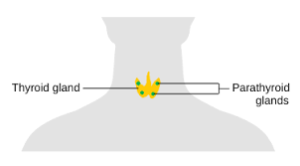
The thyroid organ is a little organ that is situated toward the front of the neck, folded over the windpipe (windpipe). It’s formed like a butterfly, more modest in the center with two wide wings that reach out around the side of your throat.
The thyroid is an organ. You have organs all through your body, where they make and deliver substances that assist your body with doing something particular. Your thyroid makes chemicals that assist with controlling numerous crucial elements of your body.
The thyroid produces the hormone thyroxine (T4), among others, in response to the pituitary gland’s production of TSH. T4 shows up in the blood in two varieties: bound T4 and free T4. Bound T4 is attached to proteins, while free T4 can travel into body tissues to be used by them.
Free T4 is often converted into triiodothyronine–T3, another thyroid hormone–which means changes in free T4 levels lead to changes in T3 levels. This means testing for free T4 levels can help to predict the effects of not only T4 itself but also the effects of any T3 that is subsequently produced.
T3 & T4 are both involved in controlling metabolism, breathing, the heart, the nervous system, body temperature, cholesterol, the ease of weight gain and loss, brain development, moisture in the skin, and menstruation. As such, abnormal amounts of these hormones can cause issues all around the body.
Thyroid levels can lead to numerous problems with health and well-being, when present in abnormally high or low concentrations.
Hyperthyroidism is the clinical term for an overactive thyroid. Symptoms of hyperthyroidism can include anxiety, mood swings, irritability, weak arms and legs, hand tremors, sleeping problems, extreme tiredness,
shortness of breath, sweating, low tolerance for heat, irregular heartbeat, high blood sugar, unexplained weight loss, more frequent bowel movements and/or urination than usual, eye irritation, or bulging eyes (symptomatic of Graves’ disease, which often causes hyperthyroidism), menstrual irregularity, enlarged breasts and/or erectile dysfunction in men, or thinning of hair.
In contrast, hypothyroidism is the clinical term for an underactive thyroid. Symptoms of hypothyroidism can include extreme tiredness, shortness of breath, low tolerance for colds, slower heart rate, new or worsening hypertension (high blood pressure), weight gain, constipation, eye swelling, menstrual irregularity, hair loss, carpal tunnel syndrome, and (rarely) loss of consciousness.
What is it used for?
A T4 test is used to evaluate thyroid function and diagnose thyroid disease.
Free T4 is linked to a whole host of issues patients could be having. This is why it’s so important to test for free T4 when several of the aforementioned symptoms manifest. This can be done quickly, accurately, and in-house with the use of Free T4 slides<link to the product page on this phrase> for the FREND™ System. [Learn more].