

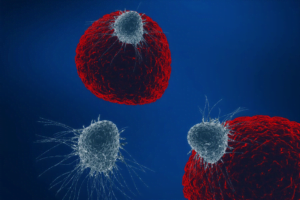
Cell Proliferation
Cell proliferation is the process that results in the increase of cells and requires cell growth and division. A fine balance exists between cell division and cell loss. In normal tissue, cell proliferation is tightly controlled so that only certain cells are dividing.
When the normal biological process of cell proliferation is disrupted, uncontrolled proliferation can give rise to aberrant cell proliferation, thus there are many reasons to measure cell proliferation. Real-time cell proliferation monitoring can be carried out to monitor growth patterns and morphological changes associated with testing of pharmacological agents, assessing cytotoxicity or investigation of circumstances of cell activation. Cell confluence and morphology can be documented using live cell imaging at various intervals. “Cell proliferation leads to an exponential increase in cell number and is therefore a rapid mechanism of tissue growth.
Cell proliferation requires both cell growth and cell division to occur at the same time, such that the average size of cells remains constant in the population. Cell division can occur without cell growth, producing many progressively smaller cells (as in cleavage of the zygote), while cell growth can occur without cell division to produce a single larger cell (as in growth of neurons). Thus, cell proliferation is not synonymous with either cell growth or cell division, despite the fact that these terms are sometimes used interchangeably” (NIH).